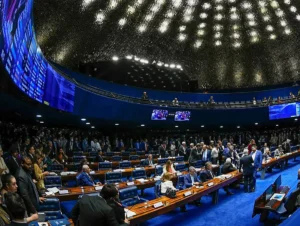
PL da IA passa no Senado Federal (Crédito: Divulgação)
Brazil’s Federal Senate took a significant step by approving Bill 2.338/2023 this past Tuesday (10), establishing guidelines for the use of artificial intelligence (AI) in the country. The legislation is seen as progress, particularly for the creative sector, as it protects copyright and defines criteria for the use of artistic works by AI systems. The bill now heads to the Chamber of Deputies, where it will undergo further debate and potential revisions.
The bill was introduced in response to the growing use of AI technologies, which often rely on copyrighted materials without proper authorization or compensation. Among the measures approved by the Senate are the requirements to disclose which content was used to train AI models and the option for creators to negotiate directly the use of their works.
Copyright at the Center of the Debate
One of the main innovations in the bill is the establishment of a regulatory body to mediate negotiations between tech companies and creators. The goal is to ensure that music, texts, and other protected content are used responsibly and with fair compensation. If the bill is signed into law, artists will be able to prohibit the use of their work by AI systems or negotiate agreements via entities like the Brazilian Union of Composers (UBC).
Another important aspect concerns how compensation for creators will be calculated. The amounts will depend on the size of the AI company, the frequency of use of protected works, and the competitive impact that generated content may have compared to human-made works. This means that if a song is used to train an AI system that generates soundtracks automatically, it should yield proportional financial compensation.
Music industry representatives such as Paula Lavigne, Marina Sena, and Michael Sullivan actively participated in the discussions. At a press conference following the Senate vote, Marina Sena emphasized the need to hold companies accountable for profiting from AI:
“We’re not here fighting against artificial intelligence — we understand it as a technology that also brings progress. But we believe that if companies are making billions from this, they must bear the consequences and pay for the data mining done with our work, our lives, and not just ours, but that of the entire Brazilian population.”
The Impact on the Music Industry
For the music market, the Senate’s approval represents an attempt to balance technological advances with the rights of creative professionals. Currently, AI systems use thousands of songs, books, and images to learn patterns and generate new content. However, many of these works are used without the consent of their authors, raising concerns about the devaluation of human creativity.
The bill also proposes strict penalties for companies that fail to comply with the rules, including fines of up to R$50 million or 2% of gross revenue. These measures aim to curb abusive practices and create a fairer environment for creators.
What’s Next in the Chamber of Deputies
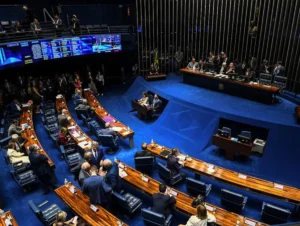
PL da IA passa no Senado Federal (Crédito: Divulgação)
Despite the progress, the bill faces significant challenges in the Chamber of Deputies. Various sectors, especially major tech companies, are expected to push for modifications to provisions they view as costly, such as the obligation to inform and negotiate the use of protected content. On the other hand, creator associations and representatives are preparing to intensify their mobilization to preserve the Senate’s achievements.
Marcelo Castello Branco, UBC’s executive director, described the Senate’s approval as an important first step but noted that the road ahead is still long:
“This partial victory in the Senate is just the first step towards responsible, modern regulation that values transparency, fair compensation, and respect for individuality when creators do not authorize the use of their protected works in AI’s ‘wild west.’ Now, we thank all who joined this effort: artists, authors, legal experts, producers, and politicians who crafted a text that, in many respects, could place Brazil at the forefront of this issue instead of leaving us in perpetual standby mode.”
Implications for Creators and AI Companies
Beyond allowing artists to license their works via individual contracts or collective management entities, the bill also mandates that AI systems using a person’s voice or image respect personality rights as defined in the Civil Code. This includes the requirement for prior consent for any use that could impact the creator’s reputation or privacy.
Additionally, the bill proposes the creation of an experimental space for negotiating compensation, enabling companies and creators to reach agreements based on clear, transparent criteria.
A Vision for the Future of the Creative Market
With this regulation, Brazil could position itself as a global leader in the debate over ethical AI use. The Senate-approved bill is considered more comprehensive than similar laws in other countries, including in Europe. However, its implementation will depend on effective collaboration among the various stakeholders involved.
For creators, the proposal represents an opportunity to ensure that technological innovation does not come at the expense of artistic value. Still, the process is far from over, and the debates in the Chamber of Deputies will be decisive for the future of Brazil’s music industry and creative sectors.
Meanwhile, artists, lawyers, and creative sector representatives remain mobilized to ensure that the changes reflect the interests of both creators and innovators. The bill is expected to be reviewed by the Chamber in 2025, with potential approval within the same year. If enacted, the main regulations would take effect within two years, with shorter deadlines for generative AI systems.
This is a pivotal moment for the relationship between technology and creativity in Brazil, with implications that could extend beyond music to other cultural and creative fields.
Originally published in Mundo da Música on December 11, 2024, written by Nathalia Pandeló
